If you’re anything like me, you probably spend a good portion of your day worrying about things that may never happen.
Is my
Did he always have that bump?
Why is he staring at me like that?
And now, thanks to recent headlines, many
What in the world is a screwworm?
The name alone sounds like something straight out of a horror movie. Unfortunately, it’s real.
Before you start wrapping your
First Things First: What Is a Screwworm?
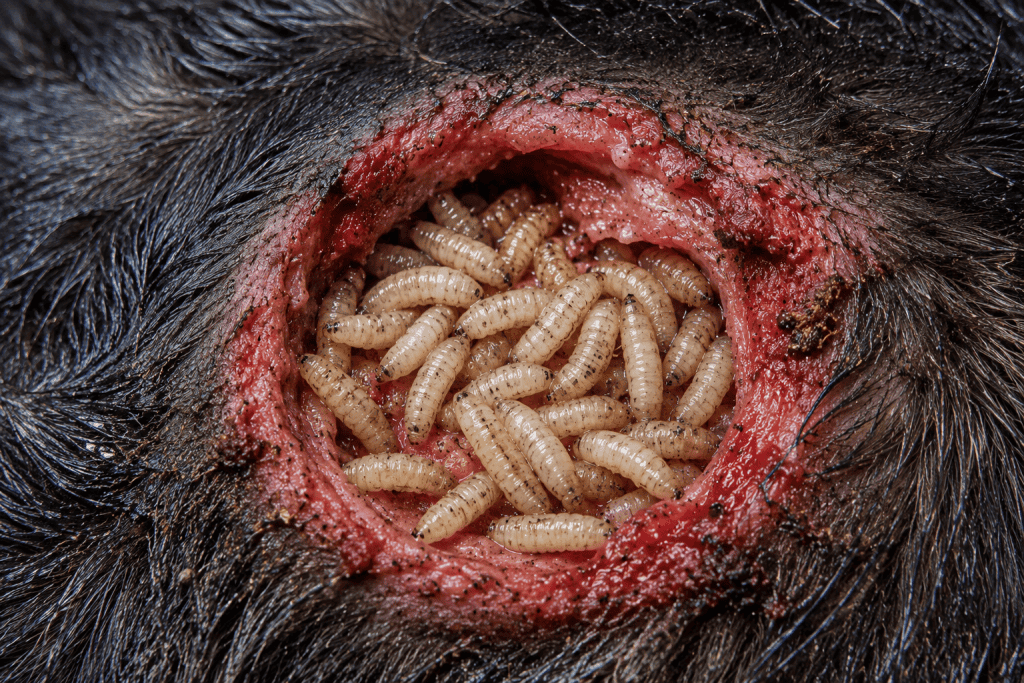
Despite the name, a screwworm is not actually a worm.
It’s the larva (maggot) of a particular fly that lays its eggs in open wounds. When the eggs hatch, the larvae feed on living tissue.
Yes. Living tissue.
I know. I wish I didn’t know that either.
Unlike common maggots that typically feed on dead tissue, screwworm larvae burrow deeper into healthy flesh. That’s what makes them such a serious concern for livestock, wildlife, pets, and horses.
How Could This Affect My Horse ?
The scary part is that the fly doesn’t need a huge injury.
A screwworm fly can be attracted to:
- Small cuts and scrapes
- Wire wounds
- Surgical incisions
- Hoof abscess drainage sites
- Tick bites
- Castration sites
- Umbilical areas on newborn foals
- Eyes, nostrils, and other natural openings
In other words, all those little
Those are exactly the places that deserve a second look.
The Day I Realized Horses Are Professional Injury Creators
Have you ever turned your
No blood trail.
No witness.
No explanation.
Just a new injury.
Horses have a special talent for hurting themselves in ways that defy all known laws of physics.
That’s why regular wound checks are so important. Small wounds can become big problems if they’re ignored.
Signs Something Isn’t Right
A normal wound should slowly improve.
A wound with screwworm infestation tends to do the opposite.
Watch for:
- Excessive drainage
- A foul odor
- Swelling
- Increased pain
- A wound that seems to be getting larger
- Visible larvae
- Unusual irritation or rubbing
If you ever see maggots in a wound, call your veterinarian immediately. Don’t wait to “see what happens.”
Trust me, that’s one surprise nobody wants.
Are Screwworms In Nevada?
At the time of writing, screwworms are not established in Nevada.
That’s the good news.
The better news is that
- Clean wounds promptly
- Use fly control around the barn
- Check horses daily
- Monitor healing injuries
- Call your veterinarian when something doesn’t look right
In other words, the same good
The Bigger Lesson
Every now and then a new
I’ve learned that the goal isn’t to panic.
The goal is to pay attention.
Horse ownership has taught me that most problems don’t become disasters overnight. Usually there are little clues along the way if we’re paying attention.
A
A hoof that doesn’t look quite right.
A wound that isn’t healing normally.
The best thing we can do is notice those clues early and act on them.
Final Thoughts
Will your
Probably not.
Should you be aware of them?
Absolutely.
The next time you’re grooming your
Because when it comes to
And if your
Well, that’s a topic for another blog post.
Happy riding, and give your
Disclaimer: I am not a veterinarian. The information shared in this article is based on personal experience and research and is intended for educational purposes only. If you have concerns about your
Leave a Reply