There comes a point in every horsewoman’s life when she finds herself standing in the pasture, squinting at her
In my case, the
Tino is 16 now, and while he is still handsome enough to know it, his topline is not quite what it used to be. He has a prominent wither—more “shark fin” than gentle rolling hill—and he has started looking a little hollow behind his shoulders.
Of course, Tino does not care about any of this. He has never once stood in front of a mirror and worried about losing muscle over his back. That particular concern belongs entirely to me.
And so, Project Topline began.
First, What Exactly Is a Horse ’s Topline?
A
A strong topline helps a
When a
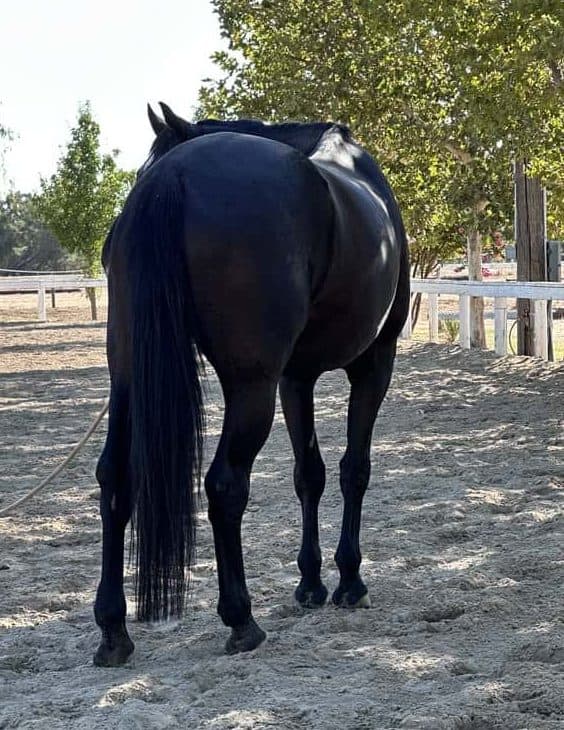
- A hollow area behind the withers
- A dipped or weak-looking back
- A thin neck
- A prominent spine or hips
- Difficulty carrying himself under saddle
- More weight on the front end
Tino has always been naturally inclined to travel a little heavy on his forehand. Why use the hind end when you have two perfectly good front legs available? Unfortunately, that is not how we build a stronger back.
Before Exercise, I Had to Look at the Whole Horse
It is tempting to see a weak topline and immediately start shopping for supplements. Believe me, I understand the urge.
But topline loss can have several causes, including pain, an unbalanced diet, dental problems, poor saddle fit, inadequate exercise or simply getting older.
Before increasing Tino’s workload, I needed to consider:
- Was he eating enough quality protein and calories?
- Were his teeth comfortable?
- Was he sound?
- Did his saddle fit his changing shape?
- Was he getting enough consistent exercise?
- Could pain be preventing him from using his back correctly?
That saddle question was especially important for Tino. His high withers and hollow area behind the shoulder make saddle fitting feel a bit like trying to put a fitted sheet on a mattress that keeps changing shape.
A
If your
Our Horse Topline Exercises
My plan for Tino is not glamorous. There are no dramatic transformations promised in seven days and no complicated equipment required.
It is mostly consistent, correct work—the very thing horses and humans generally wish could be replaced by purchasing something.
1. Walking With Purpose
Walking may not look exciting, but a forward, active walk is excellent conditioning.
I ask Tino to march rather than wander. There is a difference. Wandering is what we do when he is sightseeing. Marching is what we do when I remind him that this is technically exercise.
During our trail rides, I encourage him to step forward with a steady rhythm. Uneven ground also asks him to pay attention to where he puts his feet and use the small stabilizing muscles throughout his body.
2. Hill Work
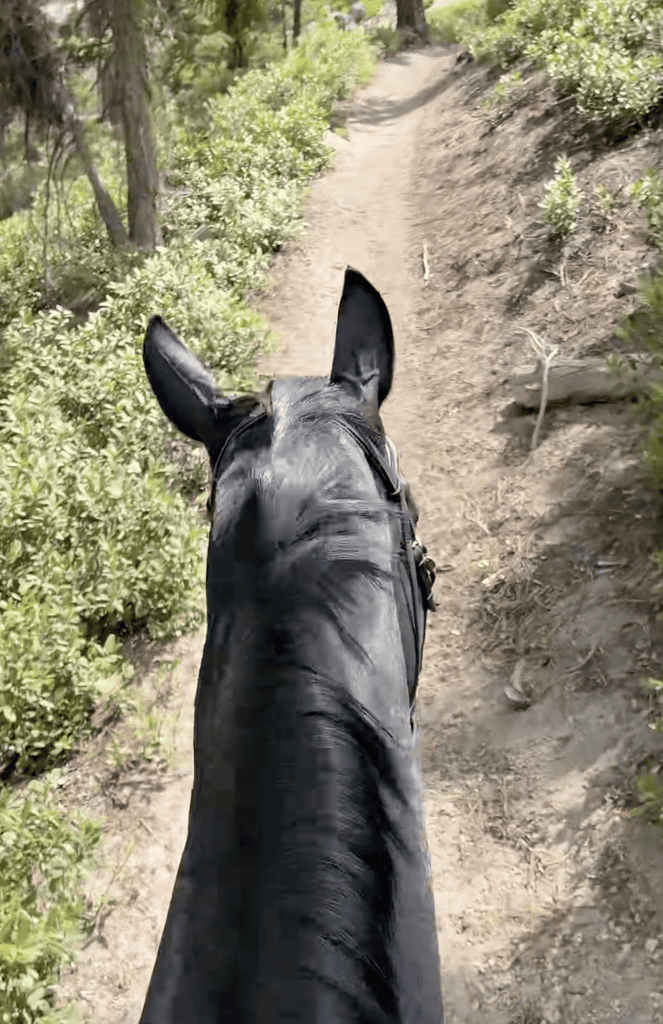
Gentle hills have become an important part of Project Topline.
Walking uphill encourages Tino to push from behind and work the muscles over his hindquarters and back. Walking slowly downhill asks him to balance and control each step.
We are starting gradually because enthusiasm is not the same thing as fitness. This is also a useful reminder for the person sitting on top.
I let him use his head and neck naturally for balance, and I avoid steep, slippery or uneven slopes that would make the exercise unsafe.
3. Lots of Transitions
Transitions are simple, effective and surprisingly revealing.
We practice:
- Halt to walk
- Walk to trot
- Trot to walk
- Trot to canter
- Canter to trot
- Changes within the walk and trot
The goal is for Tino to respond promptly while staying balanced. If he rushes forward, throws his head up or falls onto his front end, we reorganize and try again.
A few good transitions are more useful than 25 sloppy ones performed while both of us become annoyed.
4. Long and Low Stretching
At the walk and trot, I encourage Tino to reach his neck forward and downward into a soft contact.
The important word is forward. I do not want him curling his chin toward his chest or simply dropping his head while shuffling along. I want his back to swing and his hind legs to continue stepping underneath him.
We do this in short periods, particularly at the beginning and end of a ride.
When he offers a real stretch through his back, it feels completely different from a
5. Ground Poles
Ground poles are one of my favorite
We begin with several poles at the walk and then progress to trot poles. I keep the distances comfortable for his natural stride and focus on maintaining a calm rhythm.
Eventually, I may raise one end of a few poles, but raised poles are much more demanding. This is one of those situations where a little is plenty.
Also, ground poles have a way of showing you whether you can steer nearly as well as you believe you can.

Turn ordinary ground poles into a topline-building workout! These lightweight, stackable Rail Razers make it easy to create raised trot poles and cavaletti exercises without dragging out heavy jump standards. Perfect for improving balance, strength, coordination, and focus—and they’re easy to store and take anywhere. 🐴
6. Backing Up
A few correct backward steps can help activate the abdominal muscles and hindquarters.
I ask Tino for two or three slow, straight steps. I want him to pick up his feet and move thoughtfully—not drag himself backward as though I have asked him to leave a party early.
We practice backing from the ground and under saddle, always stopping before the quality disappears.
7. Carrot Stretches
At last, an exercise Tino fully supports.
Using small pieces of carrot, I ask him to stretch:
- Toward his chest
- Between his front legs
- Toward each shoulder
- Toward each side of his girth
- Toward each hip
The goal is controlled movement without his feet wandering after the treat.
Carrot stretches can improve flexibility and activate muscles through the neck, back and abdomen. They can also turn an ordinary
If your

When fresh carrots aren’t available, German Horse Muffins are the next best thing! These soft, molasses-flavored treats are perfect for rewarding your horse—or simply reminding him that he’s the very best boy. Tino-approved! 🐴🥕❤️
8. Large Circles and Spirals
Large circles, gentle changes of direction and gradual spirals help Tino become more supple and balanced.
I begin on a large circle, slowly spiral inward and then leg-yield back out. If he loses rhythm or begins falling through his shoulder, I make the circle larger.
The purpose is not to make the smallest possible circle. It is to help him maintain balance while bending through his body.
How Often Are We Doing This?
I am aiming for consistent work several days a week rather than one heroic workout followed by four days of recovery.
A typical week might include:
- One flatwork session with transitions and stretching
- One ground-pole session
- Two trail rides with purposeful walking and gentle hills
- One lighter ride or hand-walking day
- Regular rest days
I add carrot stretches and a few correct backing steps throughout the week.
Because Tino is an older
Feeding the Topline
Exercise creates the demand for muscle, but nutrition supplies the building materials.
Tino needs enough calories and quality protein, including essential amino acids, to support muscle development. Older horses may also need additional nutritional support because they do not always maintain weight and muscle as easily as they once did.
I am looking at his entire diet instead of throwing five different supplements into his feed and hoping they form a topline overnight.
A veterinarian or qualified

Building a better topline takes more than trot poles! SmartEquine Tri Amino provides key amino acids to support healthy muscle development and strength—perfect for helping Tino look and feel his best. 🐴💪
How Will I Know If It Is Working?
I plan to take a photograph of Tino every four weeks. I will stand him on level ground, take the picture from the same side and try to use similar lighting.
Daily inspection is not especially helpful because I can convince myself of almost anything.
“Look! His back is filling in!”
No, Leslie. He is standing differently.
Monthly photographs should make the changes easier to see. I will also watch how he feels under saddle. A stronger Tino should gradually become more balanced, carry himself better and find it easier to push from behind.
This Is a Long Game
A
That is the part I must keep reminding myself.
Project Topline is not about making Tino look perfect. It is about helping him stay strong and comfortable so we can continue having adventures together—whether we are returning to the show ring, tackling a trail or negotiating over whether a ground pole is actually a dangerous object.
For now, we will keep walking hills, practicing transitions and stretching for carrots.
Tino is enthusiastic about at least one-third of the program.
This article shares my personal experience and is intended for general educational purposes. Always consult your veterinarian before beginning a new exercise or rehabilitation program, especially if your
Leave a Reply